
Biography
Brice learned real estate from the foundations up: structural calculations in Abidjan, the construction of 2,519 homes for the soldiers and gendarmes of Côte d'Ivoire, then, in Paris, the technical management of a €300M portfolio in which more than 250 apartments were renovated to use less energy.
From these sixteen years, he keeps one conviction: a real estate project is decided long before the first stone is laid, when you choose who carries it and how it is financed.
That is his work at Havilah Developments, where he is a Partner: structuring projects between Abidjan and Paris, with an engineer's rigour and a financier's numbers. And that is what he stands for at Certifive, where he leads operations: that everyone's work can be seen, and confirmed by those who know it.
A public works engineer, trained in sustainable real estate at École des Ponts and in finance through an MBA, and a certified ESG analyst, he chairs ELIT's Entrepreneurship Club. He also wrote a book for those who want to invest in real estate without getting lost.
Certifive
Record presented by its author
Certifive has not certified it. When an organization confirms a line, its confirmation appears next to it.
Roles
Practitioner Expert
Professional experience
 Co-founder & Head of OperationsHavilah Developments · 2026 - Present
Real estate structuring house, between Abidjan and Paris: a closed club of private investors who carry out operations in Abidjan together. End-to-end structuring of operations: land selection, legal and financial structuring, site supervision, reporting to members. Design of the members' training course in real estate investment, required before their first operation. First operation open for subscription at the end of 2026.
 Co-founder & Head of OperationsCertifive · 2025 - Present
Certifive gives organizations the means to confirm the records of their members and alumni, and to follow what becomes of them. Running operations: supporting client organizations, their Studio, the register of experts and Certification. Leading the product: the Studio for organizations, the expert's space on the web, the iPhone and Android apps.
 Sustainable Asset ManagerLokalis · 2019 - 2025
Technical and ESG management of a €300M portfolio, more than 40 assets, across the whole life cycle: audit, capex and opex, works programme and equipment. ESG reporting and decarbonisation strategy run in-house.
 Head of Construction ManagementFonds de Prévoyance Militaire · 2016 - 2019
Property development of 2,519 housing units in a mix of single-family homes and apartments, including all related utilities.
- Civil Engineering ConsultantInnov Construction/R&T · 2011 - 2016
Construction management for local property developers. Budget preparation, quality and deadline monitoring.
- Structural EngineerBureau d'Etude et d'Assistance Technique du Bâtiment (BEATB) · 2009 - 2011
Structural modeling and analysis : Performed structural inspections and assessments on existing buildings Designed and analyzed structural elements for residential and commercial buildings.
Consultation
Remote. You describe your situation, we confirm the date with you. Nothing is due before.
150 USD per 45-min consultation · Timezone : Europe/Paris
Not sure this is the right expert? Describe your need
Expertise
Industry & Infrastructures
Real estateCivil engineeringStructuring real estate transactions
Education
 Certified ESG Analyst® - CESGAEuropean Federation of Financial Analysts Societies (EFFAS) · 2025
 MBA in Financial Analysis and Capital MarketsIFG Executive Education · 2024
Comprehensive understanding of the financial ecosystem: from fundamentals (financial analysis, asset valuation, financial mathematics) to advanced strategies (portfolio management, derivatives, quantitative investing). The program carefully integrates regulatory pillars (IFRS standards, governance) and disruptive innovations (FinTech, blockchain), while developing concrete skills in financial modeling, macroeconomic analysis and applied data science. A comprehensive training program that transforms theory into tangible optimization levers for financial performance.
 Specialized Master's Degree in Sustainable Real Estate and ConstructionÉcole nationale des ponts et chaussées · 2020
Re-inventing tomorrow's cities. Integrating the dual energy and digital transition at the core of real estate projects, from high-performance building design to sustainable operation. The course includes key tools such as BIM and sector-specific big data to manage decarbonization, optimize energy performance and guarantee the environmental quality of sustainable buildings. Combining finance, law and technical engineering, this course places people and ecology at the center of a digital revolution that is transforming real estate asset management.
 State Diploma in Public Works EngineeringInstitut National Polytechnique INPHB · 2009
Civil Engineer, after an advanced program in science and technology preparatory classes MP/MPSI.
Affiliations
 ELITChairman, Entrepreneurship Club · 2023 - Present
Publications
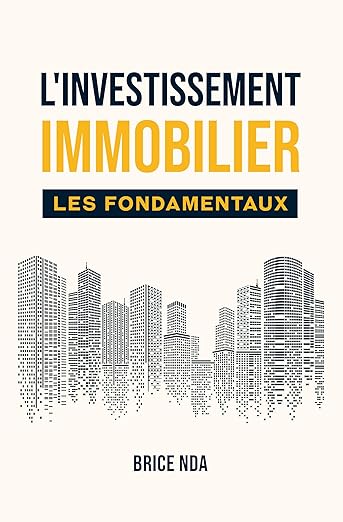
L'investissement Immobilier - Les Fondamentaux
Know the different types of existing real estate assets. Define your profile and your investment strategy. Analyze the real estate market based on the economic context: inflation, central bank key rates, etc.
- 21 Sept 2025The challenges of asset acquisition with limited financial resources!
Key Insights The main obstacle is not money, but knowledge: Contrary to popular belief, the number one barrier to real estate investment is not a lack of capital, but a lack of skills to navigate a complex market. Africa, a testing ground for alternative financing: Faced with limited access to bank credit due to the weight of the informal sector, community financing mechanisms such as “tontines” have evolved. Now digitized, they are inspiring a new generation of PropTech solutions. Syndication democratizes access: Models such as real estate syndication, which are highly structured in the United States, now allow groups of investors to join forces to acquire large-scale properties (office buildings, residential projects), making high-impact investment accessible to a wider audience. Passive investment is key: For many investors, the greatest value of these new models is the ability to invest without having to manage day-to-day operations. This marks the emergence of a new class of accessible and diversified real estate assets. How to invest in real estate without breaking the bank (and without losing sleep) Investing in real estate has always been a symbol of solid wealth, a reliable refuge in an uncertain world. Yet for millions of people around the world, this dream seems out of reach. We often think that the main obstacle is financial. “I don't have enough money,” people say. But the reality is more subtle. The real barrier is not capital, it is complexity. Today, as markets become increasingly volatile, a question arises: how can we democratize access to real estate investment? When constraints drive innovation In sub-Saharan Africa, where nearly 70% of jobs are in the informal sector, accessing traditional real estate credit is an uphill battle. Far from being a hindrance, this constraint has forced the emergence of ingenious alternative solutions. The best known is the tontine, a community-based revolving savings system that allows projects to be financed without going through the banking system. Something that used to be an old-school thing now has a 2.0 version. Mobile apps in Senegal and Ivory Coast are making this process digital, creating “real estate tontines” that let groups of young professionals buy land or apartments together. It's crowdfunding, but with a deep cultural foundation and community trust. From Tontine to Syndication: the emergence of a global model This idea of pooling capital to invest as a group is not unique to Africa. In the United States, it is at the heart of a highly structured model: real estate syndication.. The principle is simple: a "Sponsor" (the professional who leads the project) identifies an opportunity (an office building, a residential complex) and raises funds from a group of "Passive Investors." Together, they form a company to acquire and manage the property. "The main attraction of real estate syndication is to grant the possibility of owning a property that you could not otherwise afford." The advantage for the passive investor is immense. They can diversify their portfolio by holding a share of a high-value asset, without ever having to manage tenants or maintenance. They invest in real estate as they would in the stock market, while benefiting from direct knowledge of the project through regular reports. A new frontier for investors From the digitalization of African tontines to the democratization of real estate syndication, a new fundamental trend is emerging. Real estate investment is no longer reserved for institutional investors or wealthy individuals capable of managing complex projects on their own. These collaborative models and technology are enabling a new generation of investors to access high-potential opportunities, diversify their assets, and participate in large-scale projects, no matter where they are in the world. The real estate investment revolution is on the move, and it is more inclusive and accessible than ever before.
Read the piece
Available for media interviews
TVRadioPodcastConferencePressWebinar
Languages
EnglishFrench
Location
Paris, France
Sustainable Development Goals
The SDGs displayed are those that resonate most deeply with Brice NDA, making their heart beat through their project contributions.
- 12Responsible consumption and production
- 17Partnerships for the goals