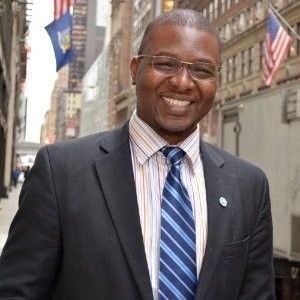

Dr. Drissa KONE est enseignant chercheur en résolution des conflits et expert en leadership transformationnel, avec plus de dix ans d’expérience dans l’enseignement supérieur aux États-Unis et en Côte d’Ivoire. Docteur en théologie pratique (spécialité Paix et Justice) et diplômé en diplomatie de l’Université militaire de Norwich, il conjugue rigueur académique et engagement terrain pour promouvoir la paix, la cohésion sociale et le développement personnel.
Depuis 2015, il anime des formations en leadership, développement personnel et gestion des conflits dans les principales universités ivoiriennes, notamment à l’Université Félix Houphouët-Boigny et à l’Université Pelefero Gon Coulibaly. Ses interventions, à la croisée de la psychologie, de la spiritualité et du management, touchent aussi bien les étudiants que les professionnels, les activistes et les leaders communautaires.
Auteur de plusieurs publications scientifiques et ouvrages sur la paix, la diplomatie culturelle et la transformation des conflits, Dr. KONE est également consultant en accompagnement psycho-spirituel au sein du cabinet Success Consulting Services à New York. Il est reconnu pour son approche holistique, son art oratoire et sa capacité à mobiliser les consciences autour des valeurs de paix, d’unité et de justice.
Professional Experience· 5
Associate Professor of conflict resolution
HJ International Graduate School for Peace and Public Leadership
2022
Director of student life Adjunct faculty
Unification Theologic seminary
2016-2017
Professor
HJ International Graduate School for Peace and Public Leadership
2016
Consultant
Success Consulting Services
2015
Personal development coach
Barrytown Collège of UTS, New York, États-Unis
2013
Education· 6
Certificate in Psycho-Spiritual Counseling
Westecher Medical Center New York-USA
2021-2023
Doctorate in Human and Social Sciences
HJ International Graduate School for Peace and Public Leaderhsip
2016
Certificate in Happiness Science
EdX, University of California Berkeley, États -Unis
2014
Master's Degree in Legal, Administrative, and Political Sciences Specialization: Diplomacy
Norwich University, Northfield, Vermont, États-Unis
2012-2014
Master's Degree in Human and Social Sciences Specialization: Theology
HJ International Graduate School for Peace and Public Leaderhsip
2010-2012
Bachelor's degree in English
Félix Houphouët-Boigny University, Abidjan, Ivory Coast
2004-2007
 The Song of Consciousness: The Breath of Conscious Leadership
Key Insights Transformational leadership is gradually establishing itself as a path of emancipation and healing for African societies scarred by conflict. By substituting domination with awareness, it places the human at the heart of governance and invites a reconciliation of politics with ethics. Its strength lies in an assumed emotional intelligence, sincere listening, and a deep understanding of cultural diversities. The emblematic figures, from Nelson Mandela to community mediators in West Africa, remind us that true peace arises from humility and inner transformation. Key Figures ⇒ More than 50 armed conflicts are active in Africa, representing about 40% of global conflicts (ICRC, 2025). ⇒ 60% of African citizens believe their leaders do not listen to them (Afrobarometer, 2025). ⇒ 21 young African leaders were trained in Gorée in September 2025 as part of the AGORA Youth program. ⇒ 3 African countries (Burundi, DRC, Mali) are integrating psycho-spiritual approaches into their peace processes, with support from UNDP. ⇒ 1 major regional forum, the Lomé Forum on Governance and Peace (March 2025), placed transformational leadership at the heart of discussions on post-conflict transitions. In 2025, Africa continues to question the nature of power and how it can become a force for cohesion rather than an instrument of division. This was particularly the case during the Lomé Forum on Governance and Peace in West Africa, held in March under the auspices of ECOWAS, which dedicated its work to the role of transformational leadership in post-conflict transitions. Dr. Drissa KONE, a researcher and lecturer in conflict resolution and peace dynamics, states that “transformational leadership is based on shared influence, not on the cult of the leader. It is no longer about dominating, but about accompanying the collective consciousness towards a new political maturity.”. Her vision combines academic rigor with field engagement. It redefines the figure of the African leader by inviting them to move beyond the verticality of power to reconnect with a more humanistic conception, based on responsibility, inner clarity, and social co-creation. Where domination has often led to distrust and fragmentation, this leadership seeks to awaken, unite, and transform. Reinventing power through service and awareness For decades, the figure of the chief has held an almost mystical place in the African political imagination. Inherited from the great man theory, this conception elevated the leader to a solitary hero, possessing an almost providential charisma. But this perception, which has shaped many regimes, has also fostered abuse of power, confiscation of debate, and personalization of the state. “When a leader identifies with the nation itself, they end up losing the clarity necessary for exercising power,”, observes the consultant in psycho-spiritual support. This drift often leads to distrust, exclusion, and, in fragile contexts, the resurgence of conflicts. Transformational leadership stands in opposition to this tradition. It does not rely on force, but on awareness, on a leader's ability to inspire without dominating.“The transformational leader does not impose their vision, they share it. They do not claim to hold the truth, they seek its multiple faces through dialogue,”, specifies the conflict management trainer. In Liberia, Mali, and Sierra Leone, social reconstruction initiatives already embody this paradigm shift. Community reintegration programs emphasize listening, co-responsibility, and the symbolic rehabilitation of victims. By placing collective awareness at the center of governance, these approaches sketch a lasting peace based on understanding rather than coercion. The rigor of the heart: the three foundations of conscious leadership Building peace requires as much strategic clarity as inner sensitivity. The personal development specialist identifies three essential pillars for this new mode of governance: self-awareness, genuine listening, and cultural competence. Self-awareness involves recognizing and mastering one's emotions before they govern decisions.“Many leaders react out of fear or anger, without seeing that these emotions reflect unresolved inner wounds,”explains Dr. KONE. This introspection liberates speech and disarms the authoritarian postures that often fuel political tensions. Listening, for its part, is the beating heart of transformational leadership. It is not merely a matter of courtesy, but a true act of recognition.“Listening without interrupting is granting the other a place in the collective narrative. It is silently telling them: you exist,”he emphasizes. Finally, cultural competence invites us to perceive diversity not as a threat, but as a richness. Understanding the symbolic, religious, or customary logics of each community allows for the development of inclusive and peaceful policies. In Ghana, the program Peace through Understanding illustrates this approach. By training young leaders in intercultural mediation and emotional management, it helps prevent community fractures and strengthen trust between ethnic groups. Mandela, or the humility of power No example better summarizes the significance of transformational leadership than that of Nelson Mandela. His rise to the presidency could have been the prelude to a historical revenge. However, he chose another path, that of reconciliation, dignity, and forgiveness. “Mandela proved that a leader could be strong without being domineering, visionary without being authoritarian,”reminds Drissa KONE. Refusing to substitute one power for another, he preferred to found a society on mutual recognition and shared memory. His attitude, imbued with profound emotional intelligence, rehabilitated the idea of power that elevates rather than crushes. The Truth and Reconciliation Commission he established marked a historic turning point. By promoting speech, confession, and recognition of wounds, it allowed for an unprecedented collective catharsis. This approach, both political and spiritual, showed that authentic peace is not decreed, but built through truth and compassion. Even today, his legacy inspires many reconciliation processes, notably in Côte d'Ivoire, where local initiatives adapt this model to their cultural contexts. New voices, new paths: the transformational echo in West Africa From Dakar to Ouagadougou, from Conakry to Freetown, initiatives are multiplying that reinvent peace through hybrid approaches, combining ancestral traditions and psycho-spiritual methods. In Burkina Faso, community talking circles now integrate mediators trained in trauma psychology and cultural symbolism. In Sierra Leone, healing dialogue programs bring together former combatants, women victims of violence, and customary leaders around rituals of repair and collective dance. In three African countries; Burundi, the DRC, and Mali; UNDP supports the integration of mental health and spirituality into peace processes, in connection with local realities. "Psycho-spiritual approaches remind us that peace does not result solely from the signing of an agreement, but from an inner transformation of beings," the expert emphasizes."They repair what war has destroyed: trust, dignity, the ability to love." However, he remains clear-headed: "Too many African leaders remain prisoners of logics of fear and control. But the awakening of consciousness is underway. If the younger generations manage to embody this vision, then Africa will become a laboratory for 21st-century leadership." In September 2025, 21 young African leaders were trained in Gorée as part of the AGORA Youth program, dedicated to democratic innovation and transformational leadership. This new generation embodies a promise: that of a power that listens, connects, and transforms without crushing. This new breath cannot be decreed from the heights. It germinates in the margins, is embodied in voices that dare vulnerability as a political strength, and outlines a governance rooted in humanity. Transformational leadership is not a utopia. It is a demanding, slow, but fruitful practice; an art of presence, of the right word, and of shared responsibility. At a time when Africa seeks to reconcile with itself, this model offers more than an alternative. It proposes a metamorphosis. Not of a system, but of the consciousnesses that inhabit it. For it is there, in the invisible of intentions, that lasting peace begins.
4 Nov 2025LeadershipCulturepeace